Voltaic Mobility · Campaign · sample engagement
Your commute, un-stuck
1,840 test rides on a 1,000 goal · $9.40 CPS vs $18 target
The brief
Voltaic Mobility had a launch-ready commuter e-bike, zero awareness, and $40k of media against two national players who own the category's spec war.
The brief: fill the test-ride calendar — not the cart — in eight weeks, on Meta and four transit corridors only.
Success was 1,000 test-ride signups at or under $18 each, plus earned attention in the local cycling press.
Constraints: $40k media cap · Meta + transit shelters only · 8-week runway to launch event · sell test rides, not bikes.
How it was made
-
Discovery
The research wedge: the target commuter spends $311 a month on car commuting — parking-led — against $19 for the Volt One. Both leaders sell specs and range anxiety. Nobody sells the feeling of gliding past a jam. That feeling is free white space.
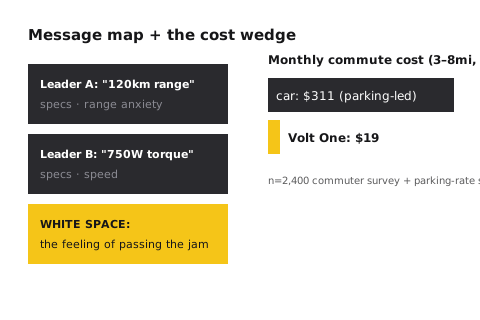
Message map + the cost wedge. -
Strategy
Platform: “Your commute, un-stuck.” One proposition — the worst hour of your day becomes the best one. Budget split inside the cap: Meta 60%, transit shelters on the four most-jammed corridors 35%, landing page and press kit 5%. Gate ① signed.
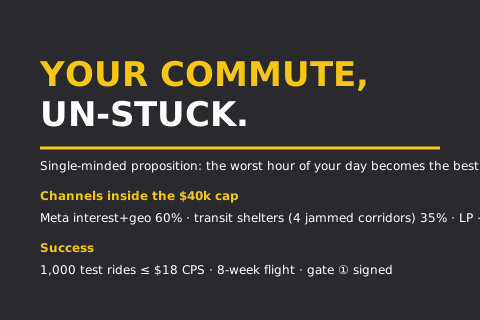
The platform brief, as approved. -
Concept
Counter-Commute satire versus spec-sheet hero versus green halo. Specs fight the leaders on their turf with a twentieth of the budget; virtue framing polls as one more thing to feel guilty about. The satire owns an emotion — and gets self-aware at transit, where the audience is literally stuck.
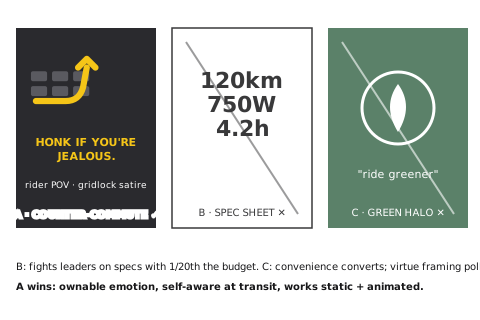
Three campaign directions — rejections preserved. -
Design
The campaign system is deliberately louder than a corporate identity: Volt Yellow on Asphalt, chunky condensed headlines, and the un-stuck arrow — a lane-change arrow breaking out of a jam grid — anchoring every unit. Three headline rotations, one voice.
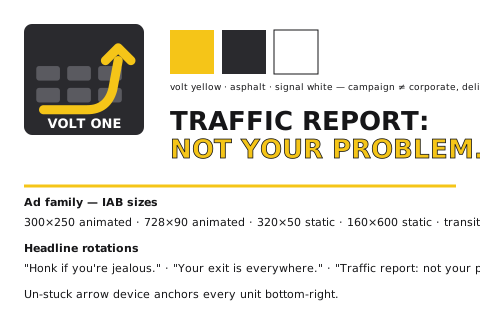
Campaign system sheet. -
Production
Channel spec: Meta assets at 1080² and 1080×1350 with three headline rotations; transit posters at print spec with corridor-coded QR for separable attribution; one UTM scheme; an eight-week flight with a week-5 creative-rotation checkpoint built in.
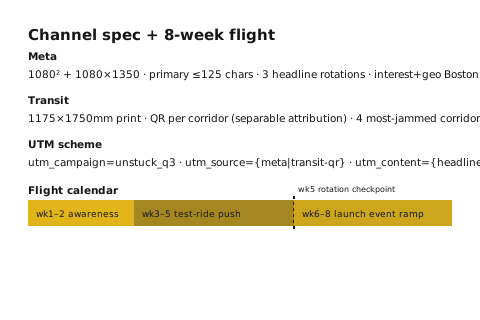
Channel spec + flight calendar. -
Results — how we measured
Attribution by channel: platform-native for Meta, corridor QR codes for transit, analytics for the landing page, mention-tracking for press. The week-5 rotation checkpoint did its job — rotation three took over and the final three weeks ramped into the launch event. Cards below; demonstrative.
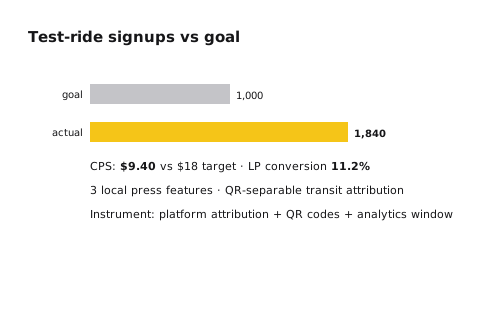
Signups vs goal instrument.
The deliverable, live
This is the working deliverable itself — not a mockup of it.
Open full screen ↗Results demonstrative data
- 1,840test-ride signups (goal: 1,000)
- $9.40cost per signup (target: $18)
- 11.2%landing-page conversion
- 3local press features earned
“We budgeted for a thousand test rides and planned a calendar around it. By week six we were borrowing demo bikes from the warehouse to keep up.”
Founder persona, Voltaic Mobility — demonstration quote
In the world
Where the system lives once it ships — shelf, hands, and street. photography in production