Granite Peak Roast Co. · Packaging · sample engagement
Roasted closer to the sky
Shelf attention 1.2s → 2.9s · retail velocity +27%
The brief
Granite Peak roasts exceptional coffee at 2,400ft in Bartlett, NH — and sells most of it wholesale because its kraft retail bags vanish on the shelf. Eye-track simulation: 1.2 seconds of attention against the category leaders' 3.0.
The brief: a bag system that wins the 1-second scan, navigates roast levels instantly, and runs on the existing supplier's fixed dieline in 4-color flexo.
Success meant shelf pickup, retail velocity, a healthier wholesale-to-retail mix, and gift-pack attach.
Constraints: Fixed dieline (existing supplier) · 4-color flexo on kraft · must badge “roasted at 2,400ft” · no photography budget per SKU.
How it was made
-
Discovery
A simulated specialty-grocery shelf told the story: nationals own dark-bag color coding, every local hides in kraft. Nobody owns altitude — the one thing Granite Peak literally has. And roast level is the shopper's first scan task, unanswered by anyone local.
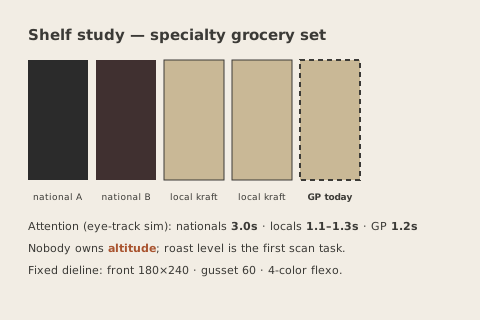
Shelf study — the kraft anonymity problem, measured. -
Strategy
Platform: “Roasted closer to the sky.” Roast level becomes a color architecture — Dawn, Day, Dusk altitude bands — the altitude badge becomes the proof element, and topographic contours become the ownable one-ink texture. Sign-off gate ① cleared.
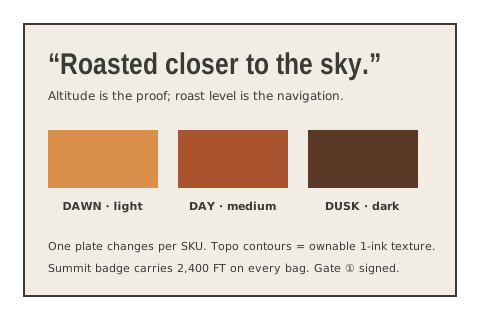
The roast-band architecture, as approved. -
Concept
Three directions: Topo Bands, Badge Americana, Photographic Peak. The badge drowned in a saturated badge shelf and dies in flexo dot gain; photography risked banding and per-SKU cost. Topo Bands reads at 1.2 seconds and scales to single-origins by swapping the crest profile.
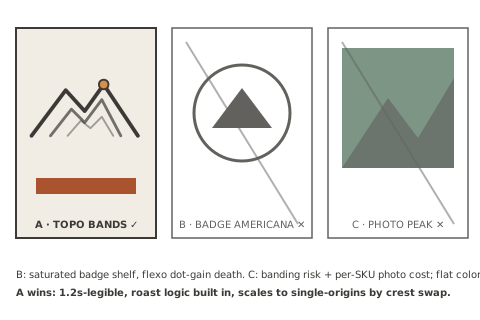
Three directions — rejections preserved. -
Design
The system: a three-line contour crest forming a peak, Granite and Snowline neutrals, and the roast bands — Dawn, Day, Dusk — plus Alpine for single-origins. Slab-wide caps shout at shelf distance; origin notes stay quiet. The crest always breaks the band.
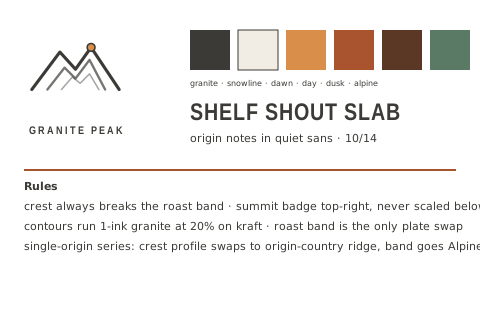
Identity sheet — crest, bands, rules. -
Production
On the fixed dieline: front carries crest, band and summit badge; the gusset earns its keep with a brew ladder. Flexo spec: four plates, 12% dot-gain compensation, 0.3mm trap — and the roast band is the only plate that changes between SKUs.
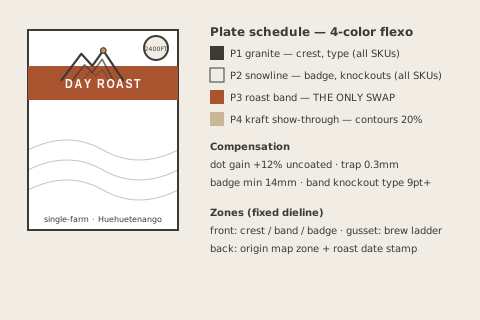
Dieline zones + plate schedule — one plate swaps. -
Results — how we measured
Instrument: 32-person eye-track panel on the simulated shelf, an 8-week retail pilot in three groceries, and the printer's run logs. Attention, velocity and gift-pack attach all land in the cards below — demonstrative data, transferable method.
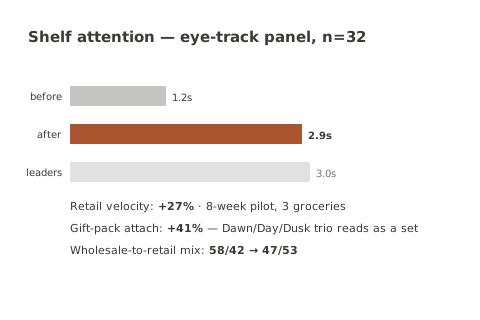
The attention instrument: before, after, leaders.
The deliverable, live
This is the working deliverable itself — not a mockup of it.
Open full screen ↗Results demonstrative data
- 2.9sshelf attention (was 1.2s; leaders 3.0s)
- +27%retail velocity, 8-week pilot
- +41%gift-pack attach (Dawn/Day/Dusk trio)
- 47/53wholesale-to-retail mix (was 58/42)
“Our printer called to ask what changed — same dieline, same plates, one swap per roast. The shelf finally looks like the coffee tastes.”
Head roaster persona, Granite Peak — demonstration quote
In the world
Where the system lives once it ships — shelf, hands, and street. photography in production