Metro Art Walk · Campaign · sample engagement
Murals you can finally find
Attendance 4,100 → 11,800 · 6,200 QR scans · 31% completed the trail
The brief
The Metro Art Walk is a self-guided mural trail whose year-2 funding depended on doubling attendance. Year 1 had beautiful murals nobody could find — no wayfinding, attendance 4,100 against a 10,000 target.
The brief: an OOH awareness and wayfinding system on donated inventory (billboard remnants and transit shelters, fixed sizes, scattered locations).
It had to work without reading for non-English speakers and carry a QR to the trail map.
Constraints: Donated OOH inventory (fixed sizes, scattered) · must read without words (non-English) · retroreflective for night · QR to the trail map.
How it was made
-
Discovery
Year 1 had the art and none of the findability: no wayfinding, murals scattered and unmarked, attendance 4,100 against a 10,000 target, and year-2 money riding on doubling it. The gap was findability, not the murals.
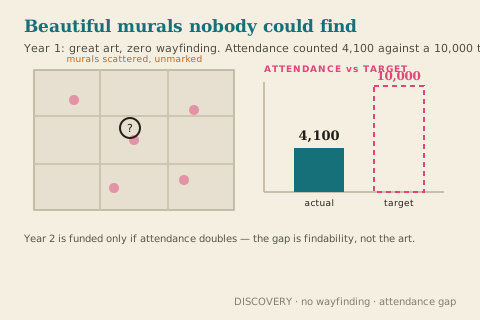
No wayfinding + attendance gap. -
Strategy
An icon-led OOH system that does awareness and wayfinding at once: readable without words for non-English speakers, legible at 60mph, retroreflective at night, a QR to the trail map, and scalable across donated inventory of fixed, scattered sizes. Gate ① signed.
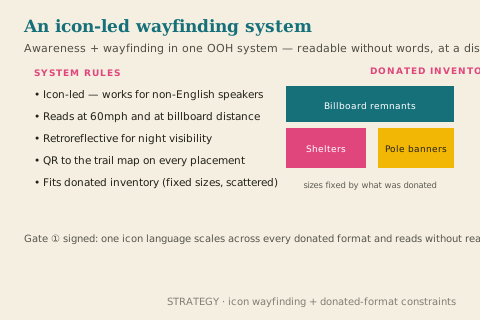
Icon wayfinding + donated formats. -
Concept
Three directions: icon wayfinding, mural photos, and text-led. Photos turned to mud on donated billboard remnants and weren't language-free; text excluded non-English readers and failed at speed. A pin plus a bold icon read at 60mph and translate to anyone. It won.
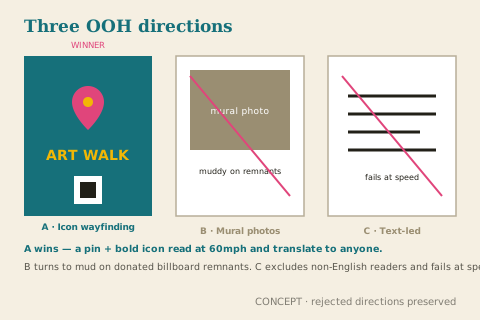
Three directions — rejections preserved. -
Design
An icon language — pin, mural, next-stop — a high-visibility yellow-on-teal palette, a retroreflective day-and-night spec, and one icon kit cropped to three donated formats. The message survives without a single word.
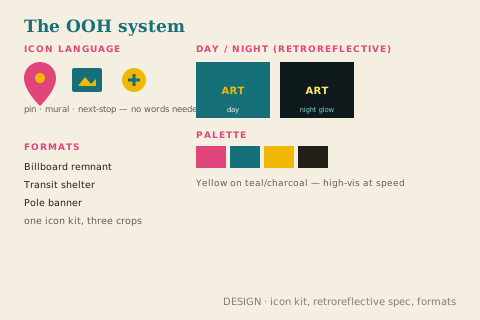
Icon kit, retroreflective spec, formats. -
Production
Format specs for donated billboard remnants, transit shelters and pole banners; retroreflective vinyl for night; a placement-coded QR so every sign attributes its own scans; and a 60mph distance test before anything went up. Print-ready files per format handed off.
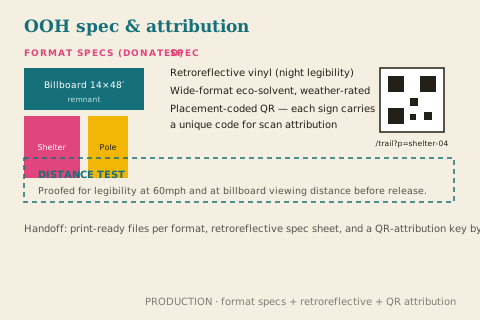
Format specs + retroreflective + QR attribution. -
Results — how we measured
Attendance counted on-trail, scans from the placement-coded QR keys: attendance rose from 4,100 to 11,800, 6,200 scans mapped back to where people found the trail, and 31% completed all twelve murals. Demonstrative; cards below.
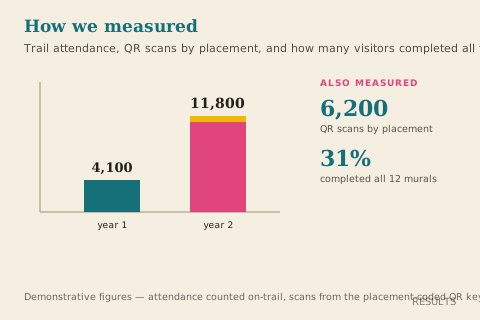
Results instrument (demonstrative).
The deliverable, live
This is the working deliverable itself — not a mockup of it.
Open full screen ↗Results demonstrative data
- 11,800trail attendance (from 4,100)
- 6,200QR scans by placement
- 31%completed all 12 murals
- 0 wordsneeded to follow the trail
“People used to drive past the murals without knowing they were there. Now they follow the pins from one to the next — and we counted nearly three times the crowd.”
Program director persona, Metro Art Walk — demonstration quote
In the world
Where the system lives once it ships — shelf, hands, and street. photography in production