Kiln & Crate Ceramics · Custom Tooling · sample engagement
One board, six stations
Late shipments 6% → 0.8% · Friday reconciliation 5h → 40 min
The brief
Kiln & Crate is a nine-person studio pottery shop wholesaling to 40 boutiques. Firing schedules, glaze batches and orders lived in three disconnected spreadsheets and a whiteboard.
Six percent of orders shipped late purely from lost status, and the owner spent every Friday reconciling by hand.
The brief: one shared tool on the studio iPad — no new logins, works through the no-wifi kiln room, no per-seat SaaS fees.
Constraints: Zero new logins (studio iPad) · works offline-ish (sync on return from the no-wifi kiln room) · no per-seat SaaS fees.
How it was made
-
Discovery
Firing, glaze and orders each lived in a separate spreadsheet, plus a whiteboard — nothing connected. Six percent of orders shipped late purely from lost status, and the owner reconciled every Friday by hand. The cost was status, not capacity.
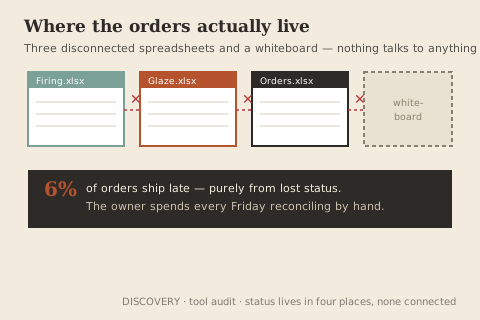
Tool audit — status lives in four places. -
Strategy
Replace four tools with the path a pot already takes: thrown, bisque, glaze, fired, packed, shipped. The non-negotiables — zero logins on the studio iPad, offline-ish through the no-wifi kiln room, no per-seat fees — shaped the build. Gate ① signed.
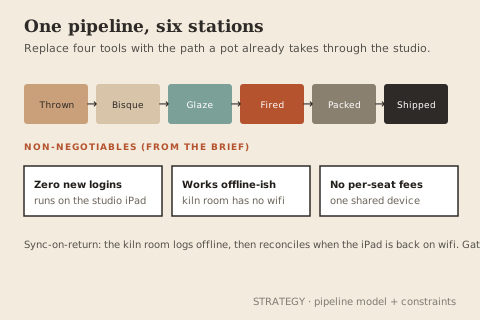
Pipeline model + constraints. -
Concept
Three interface directions: a kanban board, a production calendar, a sortable list. The calendar hid current state behind dates; the list was the spreadsheet they were escaping. The board shows status at a glance from across a sunlit studio — it won.
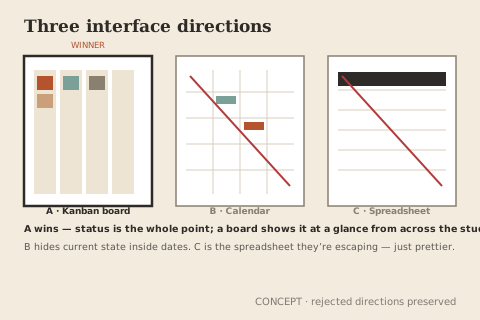
Three directions — rejections preserved. -
Design
Order-card anatomy: a stage color bar, order number and boutique, quantity and glaze, due date and an automatic late-risk flag. A kiln-load capacity bar tells the studio when to hold or fire early. High-contrast tints for a sunlit room.
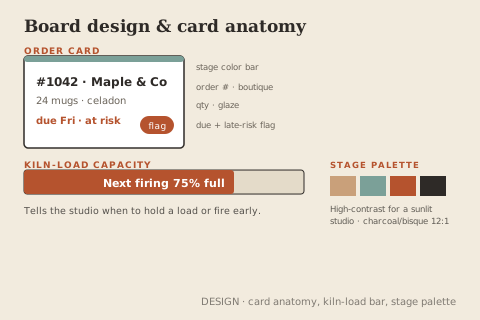
Card anatomy + kiln-load bar. -
Production
An installable web app on one shared iPad — no logins. A local-first store queues writes through the no-wifi kiln room and flushes on reconnect; the sync state never claims saved until it is. Glove-friendly 56px targets; no per-seat SaaS.
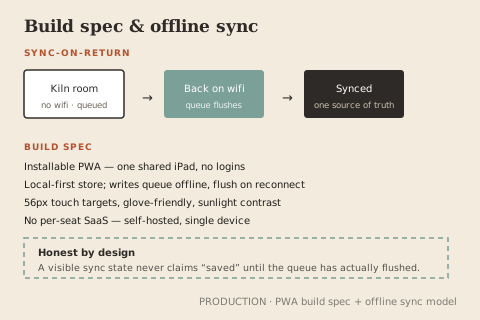
Build spec + offline sync model. -
Results — how we measured
The pipeline timestamps its own stages, so the numbers came free: late shipments fell from 6% to 0.8%, Friday reconciliation from five hours to forty minutes, status lookup from four minutes to eight seconds. Demonstrative; cards below.
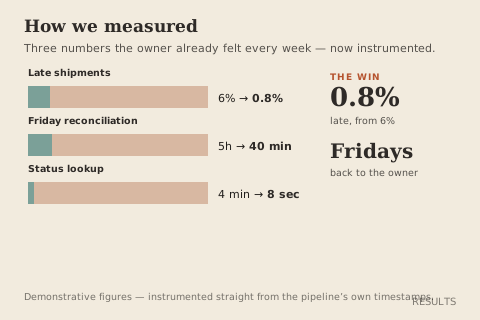
Before/after instrument (demonstrative).
The deliverable, live
This is the working deliverable itself — not a mockup of it.
Open full screen ↗Results demonstrative data
- 0.8%orders shipped late (from 6%)
- 40 minFriday reconciliation (from 5h)
- 8 secstatus lookup (from 4 min)
- 0new logins / per-seat fees
“I used to lose Fridays to a stack of spreadsheets. Now I glance at the board from the wheel and know exactly what ships Monday.”
Owner persona, Kiln & Crate Ceramics — demonstration quote
In the world
Where the system lives once it ships — shelf, hands, and street. photography in production